

Die Cut Textured Silicone Foam Gasket
ParameterValue/PerformanceDensity (g/cm ) 0.3 1.0 25% Compression Stress (kPa) 15 45 Tensile Strength (MPa) 1.5 3.5 Elongation at Break (%) 200 400 Compression Set (100℃)12% Water Absorption (%)1.0…
View productSENMA builds the Thermal Conductive Silicone Foam Pad for design and sourcing teams who need a drawing-controlled thermal interface material rather than an off-the-shelf sheet. As a Thermal Conductive Silicone Pad Manufacturer, the factory qualifies every order on thickness, hardness and dielectric performance before shipment, and as a Custom Silicone Thermal Pad Manufacturer it converts your part drawing into die-cut pads held to OEM production tolerances.
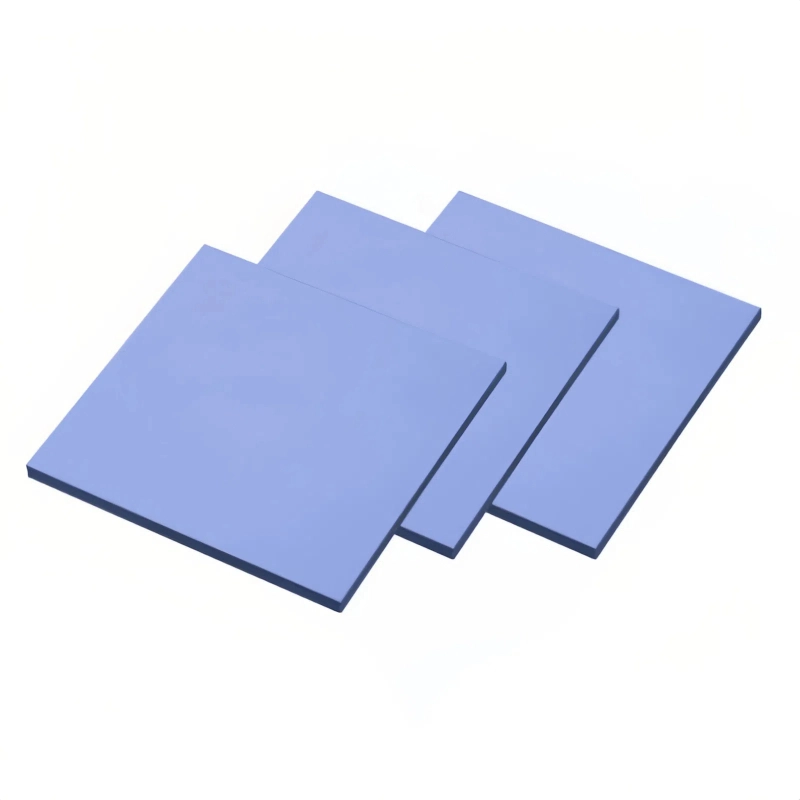
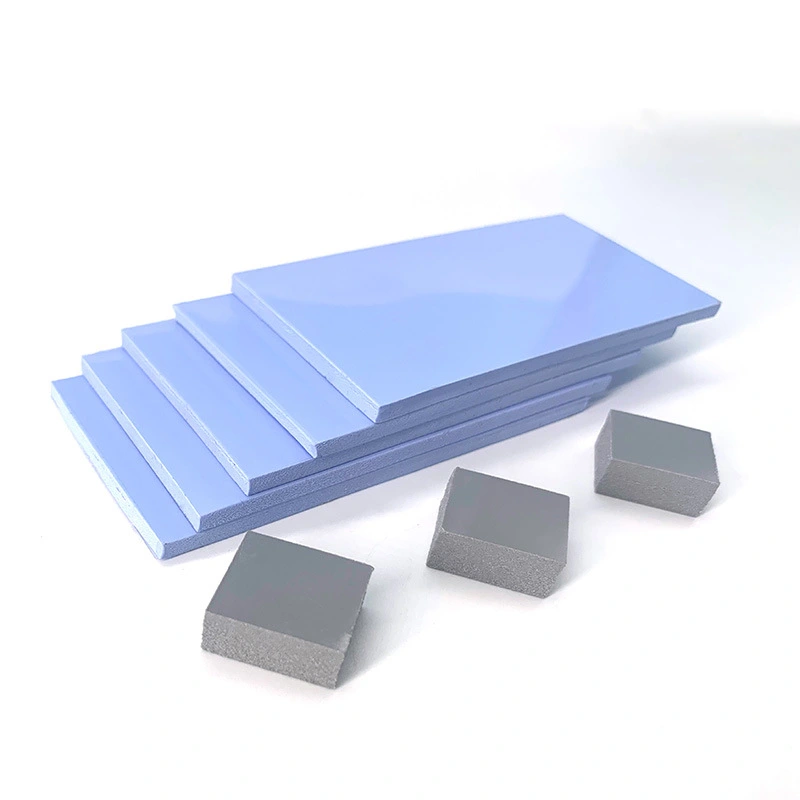
Smooth-surfaced pad stock: the surface finish is what keeps contact uniform across an uneven component set.
Drawing to Part
Thermal pads are often die-cut into specific shapes to meet exact dimensional requirements. That is the step where a generic sheet becomes a production part: the die follows your outline, the thickness is selected from the published 0.3–5.0 mm range, and the delivered part is expected to drop into the assembly without trimming on the line.
Chosen against the actual gap between the heat-generating component and the heat sink, not by default.
Defines how far the pad deflects under mounting pressure and how well it follows uneven surfaces.
Parts cut to your outline and held to production tolerances so they seat in the assembly as drawn.
Materials & Construction
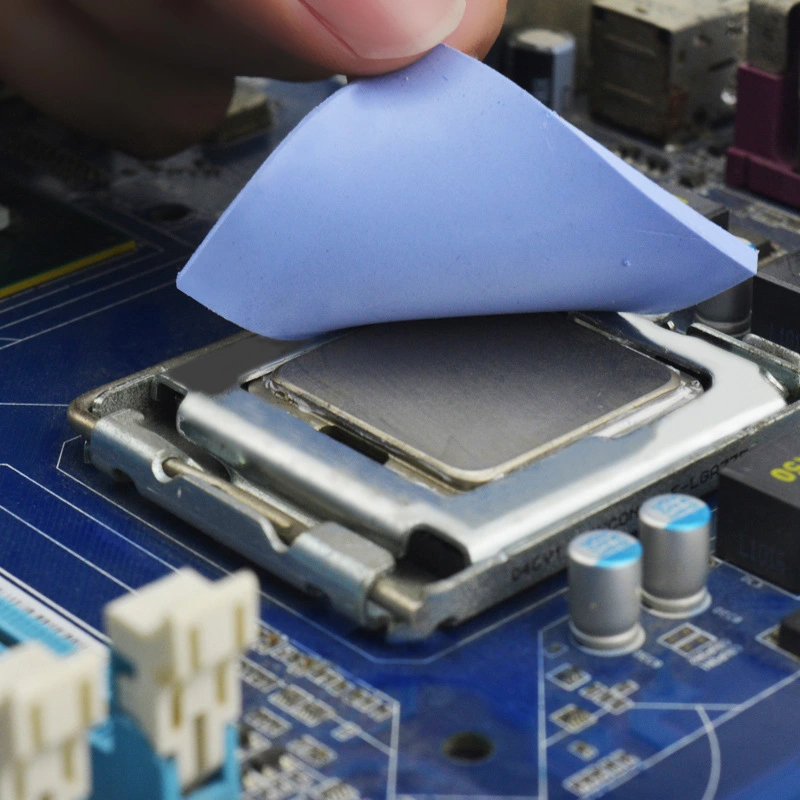
The material is a silicone elastomer filled with thermally conductive ceramic or metal oxide particles, including aluminium oxide and zinc oxide. It fills the air gaps between heat-generating components and heat sinks while keeping the pad soft enough to conform and stable enough to hold its dielectric properties under temperature cycling.
Scenario to Specification
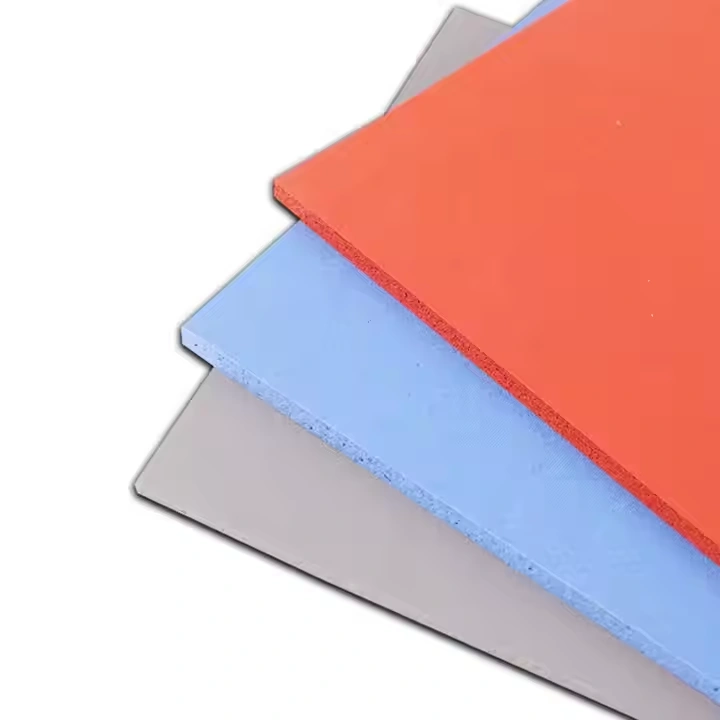
Most bad pad choices come from starting with conductivity. Start with where the part lives instead — vibration, thermal cycling and gap geometry narrow the field faster than a data sheet.
| Operating environment | What the assembly demands | Where to start |
|---|---|---|
| Automotive electronics | Maintains thermal contact under fluctuating mechanical stresses and vibrations | Pick hardness within Shore OO 20–60 for the gap profile, then confirm the grade |
| New energy & battery systems | Stable dielectric properties alongside a working heat path | Volume resistivity ≥10¹² Ω·cm; pack-level requirements confirm at RFQ |
| Communication equipment | Long service life under continuous temperature cycling | Compression resilience and low compression set take priority over peak conductivity |
| LED lighting and power devices | Continuous heat with a tight, flat interface | Select thickness from 0.3–5.0 mm against the measured gap, not the largest value |
| Consumer electronics (smartphones, tablets, laptops, gaming consoles) | Cooling CPUs, GPUs and other ICs in a shallow, space-limited stack | Thin die-cut pads with clean outlines suit compact enclosures |
Request a Quote
A die-cut quote is only as good as the inputs. Include the outline geometry, the measured gap, the operating environment and the documents your quality team needs — capacity, lead time, outgassing data and sample scheduling are all confirmed at RFQ rather than published as fixed figures.
Keep adjacent product options together for a faster catalog comparison.
ParameterValue/PerformanceDensity (g/cm ) 0.3 1.0 25% Compression Stress (kPa) 15 45 Tensile Strength (MPa) 1.5 3.5 Elongation at Break (%) 200 400 Compression Set (100℃)12% Water Absorption (%)1.0…
View product
Customize your industrial assembly with our self adhesive silicone foam gasket. We offer high-precision custom die cut gasket solutions for reliable sealing.
View product
Fully customizable OEM solutions for silicone foam die cut components. We provide wholesale silicone foam parts with high-precision engineering for industrial use.
View producta 2d drawing or dxf of the part outline, the target thickness or the measured gap, and the quantities and schedule. adding the operating temperature, the vibration level and the documents your quality team will ask for lets the material grade be fixed at the same time.
select from the published 0.3-5.0 mm range against the gap you measured, not the largest value available. a pad that is too thick can lift the component it is meant to cool.
hardness sits within shore oo 20-60, and the grade is picked from the gap profile and the compression the assembly can take. where compression resilience matters more than peak conductivity, a low compression set grade is the better choice.
the published parameter table states dielectric strength of at least 5 kv/mm and volume resistivity of at least 10 to the 12 ohm-centimetre. pack-level requirements are confirmed at rfq because they depend on the assembly, not only on the pad.
rohs, reach, ul 94 v-0 grade evidence and outgassing data are listed among the documentation a quality team may request. the operating environment decides which of those are relevant to your programme.
automotive electronics, new energy and battery systems, communication equipment, led lighting and power devices, and consumer electronics such as phones, tablets and laptops. each one shifts the priority: vibration and dielectric stability in a vehicle, compression resilience in a continuously warm fixture, thin outlines in a compact enclosure.
