


High-Performance Silicone Thermal Pad for Gap Filling & Heat Transfer
Our Thermal Conductive Silicone Pad is a flexible silicone-based thermal interface material designed to transfer heat across gaps between heat-generating components and heat sinks, cooling plates, housings, or other thermal management structures.
With thermal conductivity up to 10.0 W/m·K, thickness options from 0.5 to 5.0 mm, and an operating temperature range of -40°C to +125°C, this thermal gap pad is ideal for applications requiring efficient heat dissipation, controlled compression, and high dielectric electrical insulation.
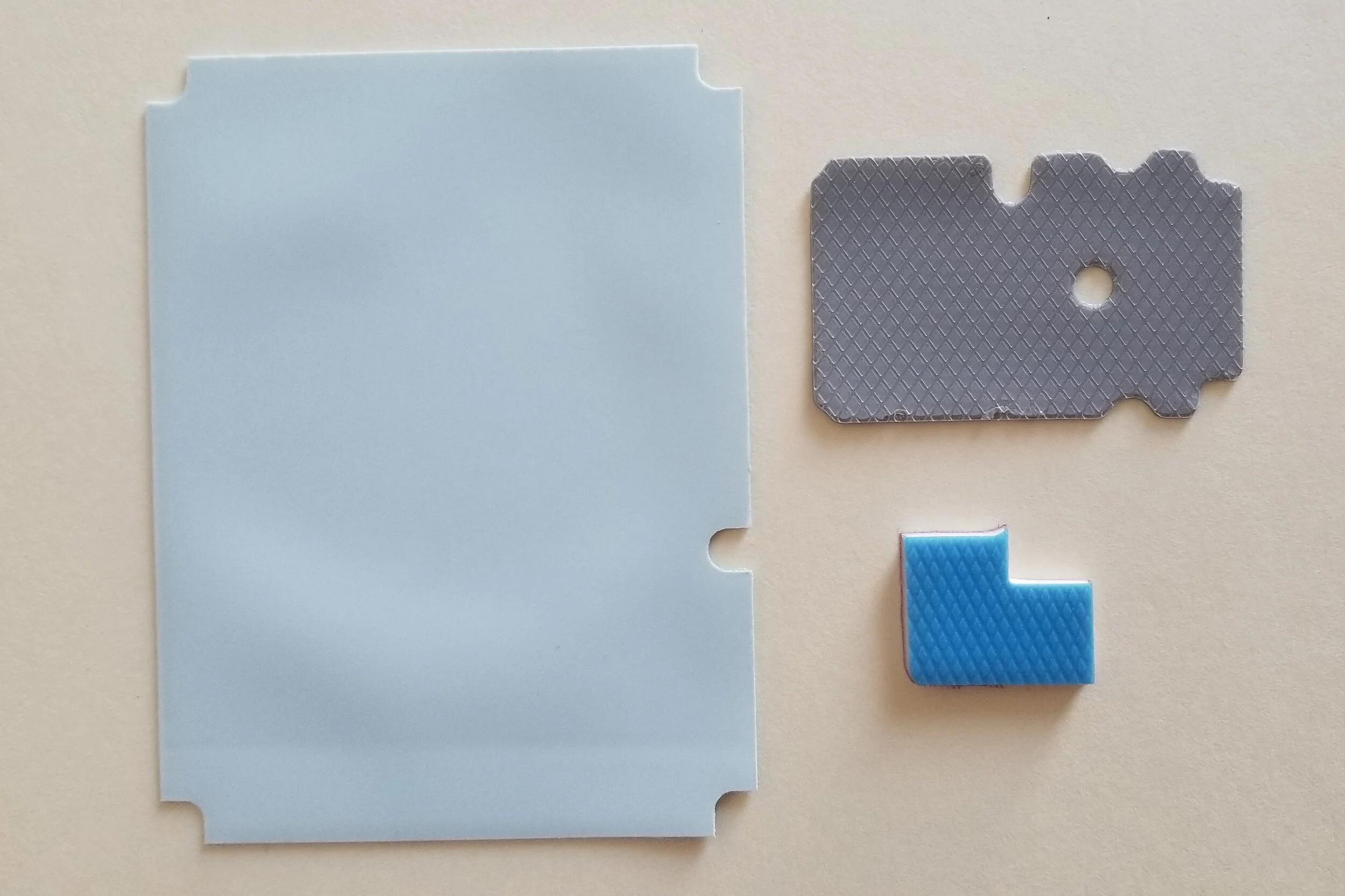
The material can be supplied as standard sheets or precision-converted into custom die-cut thermal pads based on your technical drawings, dimensions, or samples.
| Thermal Conductivity: 1.2 ~ 10.0 W/m·K |
| Thickness: 0.5 – 5.0 mm |
| Density: 3.5 g/cm³ |
| Temperature Range: -40°C to +125°C |
| Color: Multiple colors available (Gray, Blue, Pink, Custom) |


| Property | SM-T1 | Test Method |
|---|---|---|
| Color | Multiple colors available | Visual |
| Thickness | 0.5–5.0 mm | ASTM D374 |
| Density | 3.5 g/cm³ | ASTM D792 |
| Thermal Conductivity | 1.2~10.0 W/(m·K) | ASTM D5470 |
| Hardness (Shore 00) | 35–90 | ASTM D2240 |
| Elongation at Break (%) | 5 | ASTM D412 |
| Tensile Strength (psi) | 5 | ASTM D412 |
| Dielectric Breakdown Voltage (KV, @ AC 1mm) | ≥4 | ASTM D149 |
| Flame Retardancy | V-0 | UL94 |
| Volume Resistivity (Ω·cm, @ 250V) | ≥10¹¹ | ASTM D257 |
| Dielectric Constant (F/m, @ 1MHz) | ≥6 | ASTM D150 |
| Operating Temperature | -40 to 125°C | *** |
| Thermal Resistance (°C·in²/W, @50psi, 1mm) | ≤0.13 | ASTM D5470 |
| RoHS | PASS | IEC 62321 |
| Halogen | PASS | EN 14582 |
| REACH | PASS | EN 14372 |
The above values are reference specifications. Final properties may vary according to material formulation, thickness and testing conditions. Please request the latest TDS for project evaluation.
A thermal conductive silicone pad, also called a silicone thermal pad, thermal gap pad or thermal gap filler, is a preformed thermal interface material used to transfer heat between two surfaces.
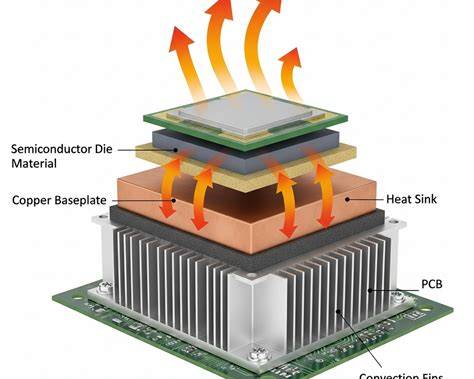
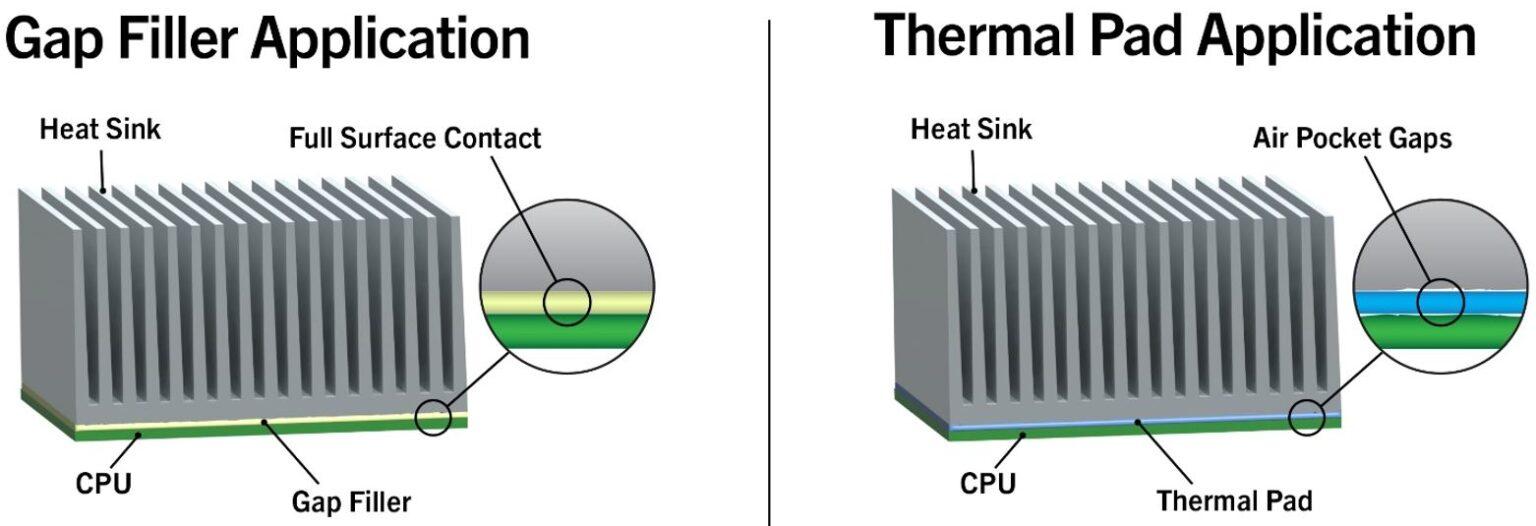
In electronic assemblies, the heat-generating component and heat sink often have small gaps caused by component height differences, surface irregularities or assembly tolerances. Air is a poor thermal conductor, so these gaps can increase thermal resistance.
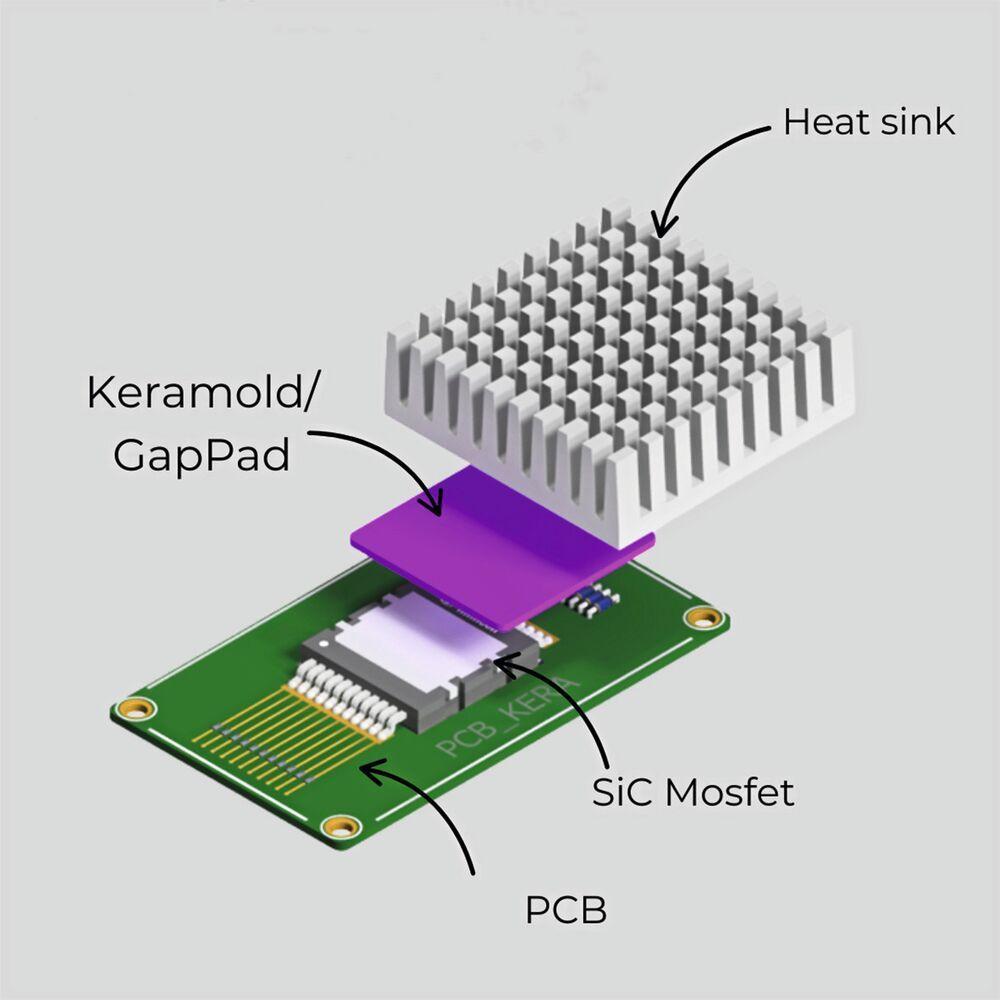
A thermal silicone pad fills the gap and creates a continuous thermal path between the heat source and the cooling structure while providing electrical insulation, vibration damping and surface conformity.
A thermal interface is only effective when the surfaces are properly connected. Even when two components appear to be touching, microscopic surface irregularities can leave air pockets between them. A thermal gap pad helps replace these air gaps with a thermally conductive material.
Heat Source (Electronic component / Power module / LED / Control unit)
↓
Thermal Conductive Silicone Pad (Fills the interface gap)
↓
Heat Sink or Cooling Plate (Transfers heat away from component)
The 10.0 W/m·K grade is designed for applications requiring higher thermal conductivity than conventional silicone pads. Actual performance is influenced by several key factors:
Thermal Conductivity + Pad Thickness + Interface Resistance + Compression + Contact Area
The correct thermal pad should be selected according to the actual interface gap and assembly conditions, rather than simply choosing the highest W/m·K value.
• High Thermal Conductivity: Up to 10.0 W/m·K for efficient thermal paths.
• Gap Filling & Compression: Fills defined gaps and conforms to uneven mating surfaces.
• Electrical Insulation: Transfers heat while maintaining electrical isolation for power electronics.
• Controlled Thickness: Preformed pads provide defined material thickness for precise positioning.
• Custom Die Cutting: Precision converted into custom profiles with holes, slots, and irregular shapes.

Positioned between LED modules and aluminum heat sinks to ensure continuous thermal transfer with electrical isolation.

Thickness Range: 0.5 mm → 1 mm → 1.5 mm → 2 mm → 3 mm → 5 mm
(Note: Thermal Resistance ≈ Thickness ÷ Thermal Conductivity. Avoid using unnecessary pad thickness when gap allows.)
Custom Capabilities: Custom Thickness | Dimensions (Sheets/Strips/Pads) | Die-Cut Profiles (Holes/Slots/Notches) | Adhesive Backing | Hardness Levels | Colors (Gray, Blue, Pink standard).


| Requirement | What to Confirm |
|---|---|
| Interface Gap & Thickness | Actual distance between surfaces & nominal thickness |
| Thermal & Electrical | Required W/m·K level & dielectric performance |
| Mechanical & Environmental | Compression pressure, operating temperature & UL94 rating |
| Shape & Supply | Die-cut shape, adhesive requirements & order quantity |
| Feature | Silicone Thermal Pad | Thermal Grease |
|---|---|---|
| Form & Thickness | Preformed solid pad (High control) | Paste (Application dependent) |
| Gap Filling & Assembly | Suitable for defined gaps / Simple placement | Better for thin gaps / Requires dispensing |
| Customization | Custom shapes & die-cutting available | Not applicable |
For commercial and engineering thermal management projects, we focus on providing complete solutions from material evaluation to customized components:
• Application-Based Material Selection: Evaluating gap thickness, compression, temperature, and electrical insulation.
• Custom Converting & Shapes: Precision production into sheets, strips, and die-cut profiles.
• OEM / ODM & Technical Support: Complete custom development according to engineering drawings and technical documentation.


